Refined Elegance: Diamond Ring Wedding Jewelry Icons for Your Brand
Every design project, whether for a new business launch or a seasonal marketing campaign, has a visual language. Finding assets that speak that language with clarity and sophistication is a constant pursuit. For those in the wedding, jewelry, luxury, or lifestyle sectors, the challenge is even more specific: how to convey romance, commitment, and timeless value without a single word. This is where a thoughtfully curated set of graphics, like the Diamond Ring Wedding Jewelry Icons, becomes an indispensable tool for the modern creative.
A Classic Black and White Aesthetic with Endless Versatility
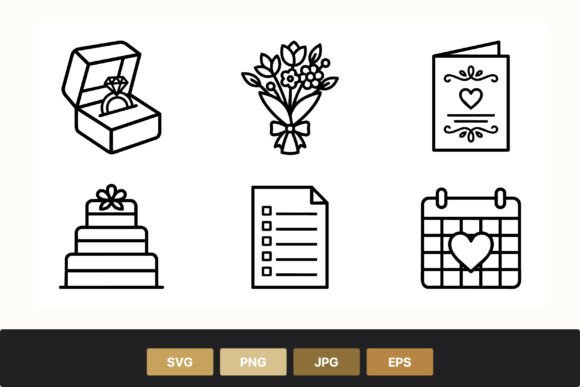
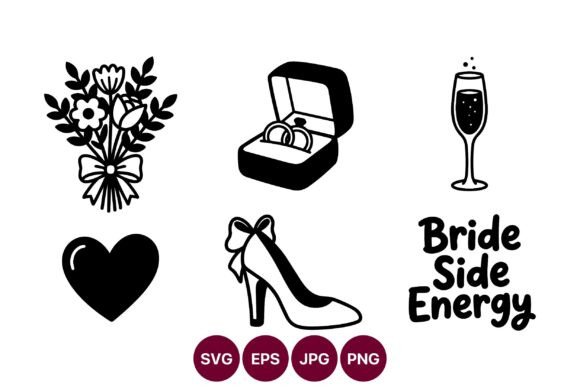
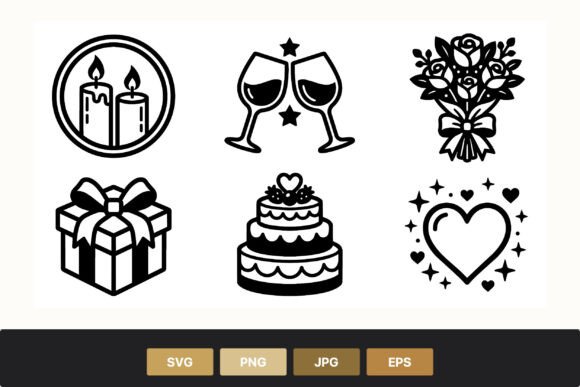
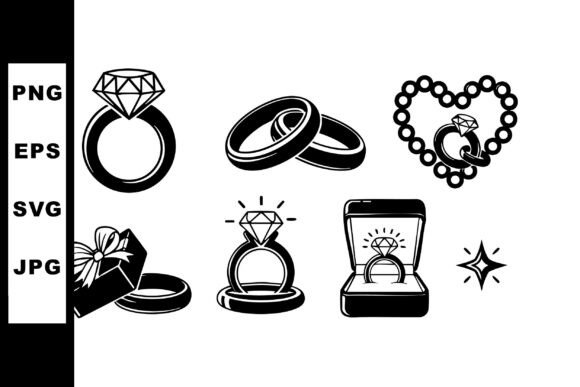
This particular vector set isn't just a collection of random shapes. It’s a focused suite of symbols: the diamond ring, the wedding band, the gift box, and the necklace with a heart charm. Presented in a refined black and white style, these icons strip away distracting color to focus on form and symbolism. The high-contrast line work ensures they are legible at any scale, from a tiny favicon on a browser tab to a large-format poster. The lack of color is a strength, not a limitation. It allows these design assets to integrate seamlessly into any existing brand palette, acting as a versatile foundation for your own creative typography and color schemes.
The included file formats—SVG, EPS, JPG, and PNG—cover virtually every use case. The vector formats (SVG and EPS) are crucial for projects that require scalability without loss of quality, such as logo design, packaging die-lines, or large signage. The raster formats (JPG and PNG) are ready-to-use for digital applications like social media graphics, website banners, and blog post illustrations. This flexibility means one download can fuel an entire ecosystem of branded materials.
Practical Applications for Designers and Business Owners
Let’s move beyond theory and into the studio. How does a set of jewelry icons actually get used? The applications are broader than you might first imagine, touching nearly every aspect of visual communication.
For branding and logo design, these icons can serve as the central motif or a secondary mark. Imagine a custom monogram for a wedding planner where two rings intertwine, or a jewelry boutique’s logo featuring a stylized diamond. The classic style ensures the mark will feel relevant for years, avoiding trendy pitfalls. In packaging design, a subtle icon stamped on a jewelry box, a tissue paper pattern, or a shopping bag handle elevates the unboxing experience, making it feel curated and premium.
The digital space is where these assets truly shine. On social media graphics, they can create consistent, on-brand templates for Instagram stories, Facebook announcements, or Pinterest pins. A heart charm icon can punctuate a "New Arrivals" post, while a diamond ring can anchor a "Bridal Collection" feature. For websites and blogs, they serve as elegant bullet points, section dividers, or illustrative elements for articles about wedding planning, anniversary gifts, or jewelry care. Their simplicity ensures they load quickly and don’t distract from your core content.
Print materials remain vital. Use these icons to add a touch of sophistication to invitations, RSVP cards, save-the-dates, or thank you notes. In editorial layouts for magazines or lookbooks, they can break up text, create visual interest in margins, or highlight key quotes. Even posters for trunk shows or in-store events benefit from a clean, recognizable symbol that communicates the event’s theme instantly.
Building Visual Consistency and Brand Recognition
One of the most significant challenges for any growing brand is maintaining visual consistency across all touchpoints. A customer should recognize your Instagram post, your website, and your printed brochure as belonging to the same family. This is where a cohesive icon set becomes a strategic asset.
By integrating the Diamond Ring Wedding Jewelry Icons across your marketing assets—from email newsletters to product hang tags—you create a subtle, recurring visual motif. This repetition builds brand recognition. Your audience begins to associate that simple, elegant line drawing of a ring or necklace with your business’s promise of quality and style. It’s a non-verbal cue that strengthens your brand identity without relying solely on your logo or wordmark.
Furthermore, these icons enhance professional presentation. A well-placed icon can make a simple price list look like a luxury menu, or turn a basic event flyer into an invitation. It signals to your audience that you pay attention to detail, which often translates into perceptions of higher quality in your products or services. This attention to visual detail directly contributes to audience engagement. Well-designed, aesthetically pleasing content is simply more shareable and memorable.
Integrating Icons into Your Design Workflow
Adopting a new set of design assets should feel empowering, not overwhelming. Here’s some practical advice for making the most of a resource like this.
First, consider your project’s core emotion. Is it classic romance, modern minimalism, or vintage charm? The black-and-white style of these icons is inherently classic and versatile, but the way you use them can shift the tone. Pairing them with a delicate script font and soft pastels evokes traditional elegance. Using them with a bold sans-serif typeface and a monochromatic color scheme creates a more contemporary, graphic feel.
This brings us to the critical practice of font pairing. Icons and typography are partners in visual communication. A flowing script font for headlines can pair beautifully with the clean lines of these icons for body copy or labels. Conversely, a strong serif font can provide a grounded, authoritative balance. Always test your pairings. Place an icon next to your chosen typeface at the intended size. Do they compete for attention, or do they complement each other? The goal is harmony.
Readability is paramount. Even the most beautiful icon fails if it obscures a message. When using icons as bullet points in a list or as part of an infographic, ensure there is sufficient contrast and spacing. The black-and-white format here makes this straightforward, but always check against your chosen background color. The high-resolution files included ensure clarity, but good design practice—like adequate white space—is still your responsibility.
Finally, a note on commercial licensing. Before using any asset in a commercial project—for a client, for sale, or for widespread marketing—it’s essential to understand the license terms. Reputable sources for premium fonts and design assets provide clear licensing information. Always review what is permitted, especially if you plan to use the icons in merchandise for sale or in digital products you distribute. This due diligence protects you and ensures you’re using the assets ethically and legally.
In the end, a set of icons like this is more than just clipart. It’s a foundational visual vocabulary. For the entrepreneur designing their first brand identity, the marketer crafting a campaign, or the blogger enhancing their storytelling, it provides a reliable, elegant shorthand. It allows you to communicate complex ideas of love, commitment, and beauty with a simple, refined mark, freeing you to focus on your message while ensuring the presentation is always polished and professional.